
Introduction
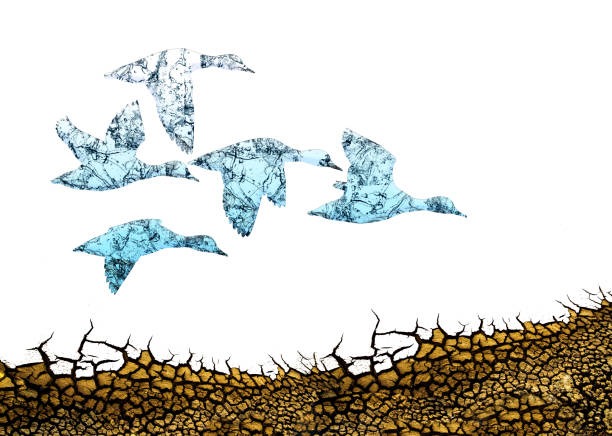
Migration of climate change has become a problem of significant world tendencies with the growing severity of the environmental crisis. Extreme weather conditions, droughts and an increasing sea level drive millions of people out of their homes. This migration transforms the world with regard to demographics, economies and geopolitics.
The insights on the effect of displacement caused by climatic changes should guide policymakers and communities to be ready to handle the challenges in the future. People migration among the environmental stressors is not only a humanitarian factor but also a transformational factor that has been influencing urbanization, resources management, and social integration. This article deals with the complex impact of the migration of climate change and its influence on our overall future.
Reasons of Migration caused by Climate change
Natural disasters, slow environmental devastation, and lack of resources are the major causes of climate change migration affecting the patterns of the world. Hurricanes, wild fires, and floods demolish properties and means of living and cause up-rooting.
In the meantime, the long-term processes, such as desertification and the increase of temperatures, decrease the efficiency of agriculture and compel the rural population to find new opportunities.
The crisis is further worsened by water shortage and soil erosion. These environmental strains impact on vulnerable territories mostly in low-lying coastal and arid areas. These factors are increasingly driving migration as a survival mechanism; this shows how the topic of climate resilience and adaptation is globally in dire need.
Hotspots of Climate Migration Geographically
Migration is one aspect of climate change that impacts the world dynamics in certain regions. In South Asia, small island countries in the Pacific, and Sub Saharan Africa, there is a high rate of displacement.
In Bangladesh, the annual displacement of millions of people due to floods is the norm and the Pacific islands are threatened with extinction as a result of the rising sea levels. Sub-Saharan Africa has droughts which affect food security.
These hotspots provide a picture of how the vulnerability of the environment generates migration flows within countries and between countries. Having the knowledge of these geographic trends is vital in guiding aid, infrastructure planning, and developing policies to help the people who have been displaced, as well as minimizing the damage to the environment.
Economic Consequences of Migration due to Climate

Migration due to climate change has both intricate effects on the world economies. On the one hand, displaced populations can overstrain the urban infrastructure and social amenities in the receiving regions. The need to have more housing, more medical facilities, and employment opportunities may increase the competition and social tensions.
Migration on the contrary can spur the economic growth by supplying labor to the expanding cities and also enhancing the skills. The rural family victims of the environment loss are also mostly supported by remittances sent home by migrants.
But the workforce in the affected regions is lost and this does not favour local economies. To balance such economic impacts, it is important to ensure that there is strategic planning on how to absorb migrants and invest to ensure sustainable development to deal with the underlying causes of displacement.
Migration has social and cultural impacts on society
Migration of climates has serious impacts on the social fabric of communities. The human movement changes the demographic makeups giving rise to multicultural cities and changes in the old way of life. The migrants can encounter integration and identity and access to services challenges. Cultural friction is sometimes felt by the host communities, but cultural exchange and diversity may also be an advantage of cultural exchange.
World societies are also affected by climate change migration because the migration causes changes in social networks and community resilience. The solutions to these issues are inclusion, human rights protection, and dialogue between migrants and host communities to create harmonious, adaptive communities.
Political Problems and Reactions
Worldwide governments are facing political pressures brought about by migration in the face of climate changes. The displacement may provoke land conflict, resource conflict, and political representation conflict. There are countries that do not have legal systems to take care of climate migrants and therefore, these people are left vulnerable.
There is less cooperation on the international front even as there is increasing demand to enact international policies to deal with environmental displacement. In areas where the forces of migration collide with pre-existing conflicts, there is a possibility of increased political instability.
Proper responses must involve incorporating climate migration in the national security and development strategies, strengthening the law and encouraging multilateral cooperation in order to control migration in a humane and sustainable manner.
Pressure of urbanization and Infrastructure
Climate migration boosts urbanization since the migrated populations relocate to cities in search of protection and prospects. This new rush strains housing, transport, water supply and sanitation infrastructure. Numerous cities cannot cope with the population growth and end up in informal settlements and becoming more vulnerable.
Planning of infrastructures needs to be in response to these population changes to avert deteriorating living standards. World cities are affected by climate change migration, which can be prevented by investing in resilient infrastructure and inclusive urban policies.
The solution to these issues is the key to sustainable urban development and the enhancement of living conditions of migrants and the local population.
Feedback Loops in the Environment
Ironically, migration with climate change has feedback loops on the environment of the world. Further urbanization and consumption of resources in the receiving regions can make pollution and carbon emission more acute which adds to climate change.
S settlements can be unsanitary and lacking proper waste disposal and this damages the environment around them. In the meantime, deserted land can deteriorate poorly without expertise.
Human Rights and Protection Problems
Human rights issues are also a common problem to climate migrants because they do not receive protection and recognition under international law. Owing to their status, unlike refugees who leave the war, climate migrants have no official designation, which puts a barrier to seeking legal assistance, medical care, and social services.
This loophole leaves them more exposed to exploitation, discrimination, and displacement without a helping hand. The proponents demand broadening of the law and legal frameworks to include the concept of environmental displacement.
Strategies of adaptation and resilience

The elements of adaptation and resilience construction are important in reducing the impact of migration of climatic change in the world. Drivers of displacement can be mitigated by investing in climate-resilient agriculture, water management, and infrastructure.
Community-based initiatives enable the vulnerable groups to adjust locally, which reduces migration. Disaster preparedness and early warning systems would provide safety in case of extreme events.
Technology and its role in managing Migration
Technology is increasingly involved in responding to the consequences of climate change migration on the world. With the help of geographic information systems (GIS), satellite data, it is possible to monitor environmental risks and migration patterns.
Mobile applications are also important in supplying migrants with crucial details about the routes, services, and legal rights. Green technologies such as renewable energy and water conservation enhance resilience among the susceptible populations. With data analytics, policy planning and the allocation of resources can be improved.
Policy frameworks and International Cooperation
International partnership is essential to fight the migration of climate change on a global level. The international organizations support the idea of incorporating environmental displacement into migration policies.
Pacts such as the Global Compact of Migration enforce mutual standards of responsibility and protection. Transborder cooperation helps in the sharing of resources, humanitarianism, and prevention of conflicts. Nevertheless, there are loopholes in implementing and financing.
Table: Key Climate Change Migration Impact Factors and Effects

| Factor | Description | Impact |
| Sea Level Rise | Coastal flooding and land loss | Displacement of coastal communities |
| Extreme Weather Events | Hurricanes, floods, wildfires | Sudden forced migration |
| Drought and Desertification | Reduced water and food availability | Rural to urban migration |
| Economic Disruption | Loss of livelihoods | Increased poverty and urban pressure |
| Social Integration Challenges | Cultural clashes and service access | Community tensions and adaptation issues |
| Legal Protection Gaps | Lack of formal status for migrants | Vulnerability and exploitation |
Conclusion
The migration effects of climate change are transforming the entire world in terms of societies, economies and politics. Migration due to climate conditions will only be on the increase as the environmental crisis increases, and it will need a holistic approach.
It is necessary to address root causes by adapting and creating resilience and engaging with other nations. Acknowledging the rights of climate migrants and assisting with their assimilation is good not only to the receiving community but to the home community.
There should be a working partnership between policy makers, researchers and the civil society to come up with sustainable policies that will strike a balance between human mobility and environmental conservation.
FAQs
Q1: What is the climate change migration?
Climate change migration can be seen as the migration of people that has been brought about by the changes in the environment in the form of rising sea level, extreme weather, and the lack of resources.
Q2: What is the role of migration of climate change in urban areas?
It raises the population pressure in cities, which creates a lack of housing and overloaded infrastructure and social issues.
Q3: Are climate migrants known by international law?
Now, climate migrants do not have an official legal status, which restricts protection opportunities in comparison with refugees.
Q4: What are the areas that are most impacted by migration caused by climate?
Coastal regions, low-lying continental areas, small island countries and arid regions such as Sub-Saharan Africa are very susceptible.
Q5: What can the governments do with climate change migration?
By policies of adaptation, legislation, investments in infrastructure and international collaboration.

1 comment
Merely wanna remark on few general things, The website pattern is perfect, the subject material is real excellent : D.